지금을 마주하는, 지금. Notice your now, now.
스마트폰 과사용에 대응하는 비판단적 개입 Non-judgmental intervention for smartphone overuse
사용량을 조절하고 싶은 앱(‘타겟 앱’)을 열면 nownow가 묻습니다. When you open an app you’re trying to gain control of, nownow asks two simple questions:
“무엇을 하고 있었나요?”
“기분은 어때요?”
“What were you up to?”
“How are you feeling?”
질문은 충동을 가라앉히고,
대답은 쌓일수록 깊어지는 리포트로 돌아옵니다.
The questions help ease the impulse.
Your answers build into reports that grow richer over time.
nownow는 타겟 앱과 나 사이의 공간입니다. nownow is a space between you and the app.
자극을 쫓다 마주한 산등성이에 해와 달이 내려와 앉습니다.
내가 나를 만나는 조용한 순간. 잠시 숨을 고릅니다.
시간의 흐름에 따라 공간은 낮과 밤으로 바뀝니다.
스크린샷을 눌러 테마를 바꿔보세요.
When you’re seeking stimulation, you find yourself before a mountain ridge,
where the sun and moon come down to sit.
A quiet moment to meet yourself.
You pause to catch your breath.
With the passing hours, the space shifts between day and night.
Tap a screenshot to change the theme.
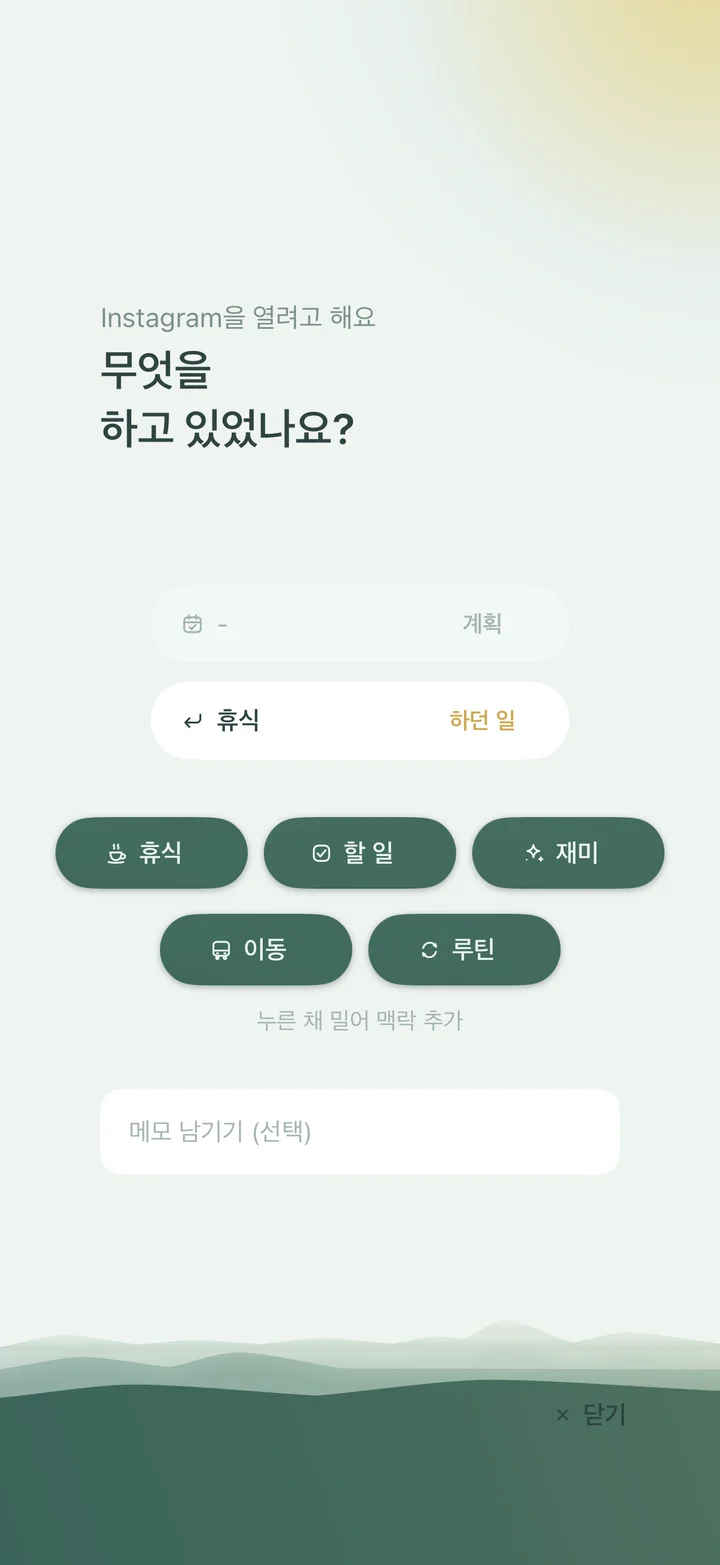
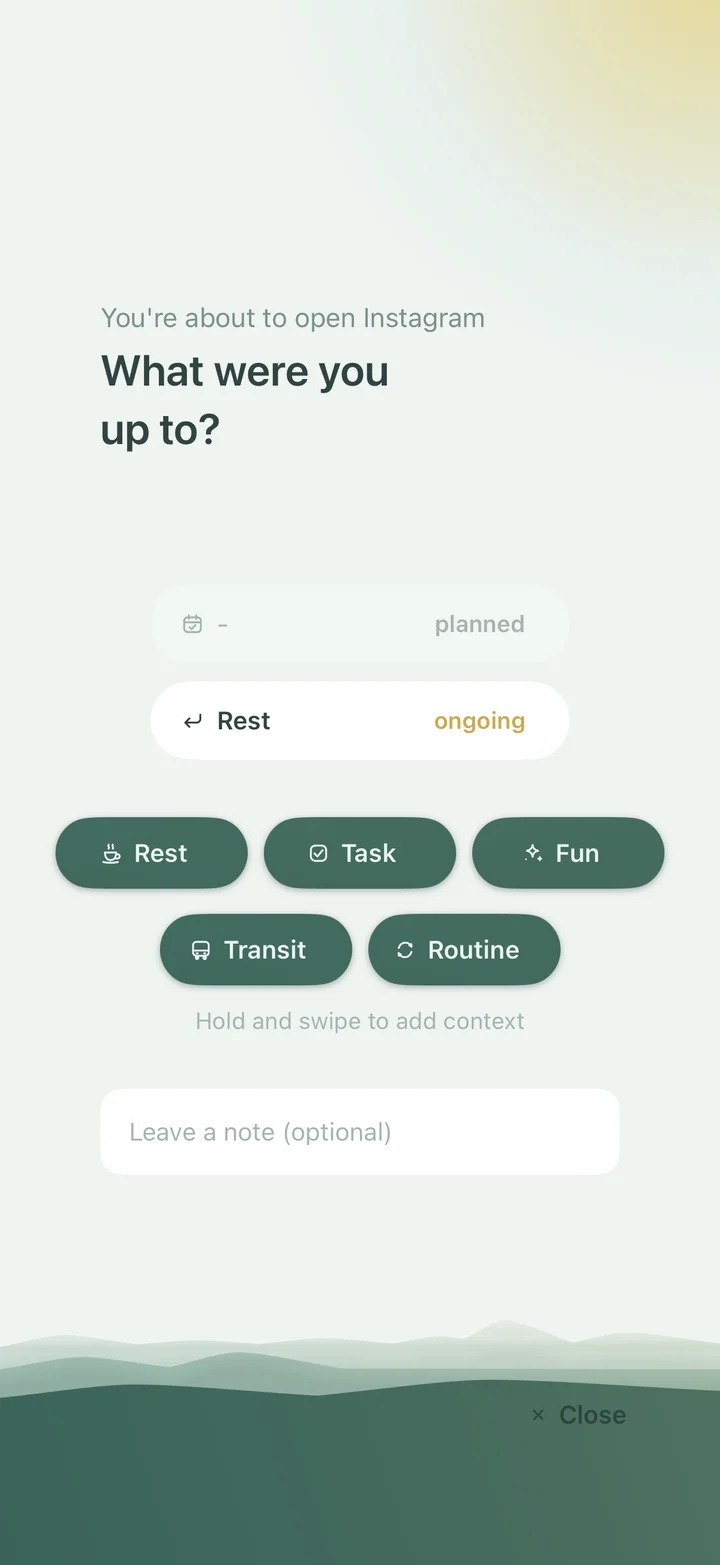
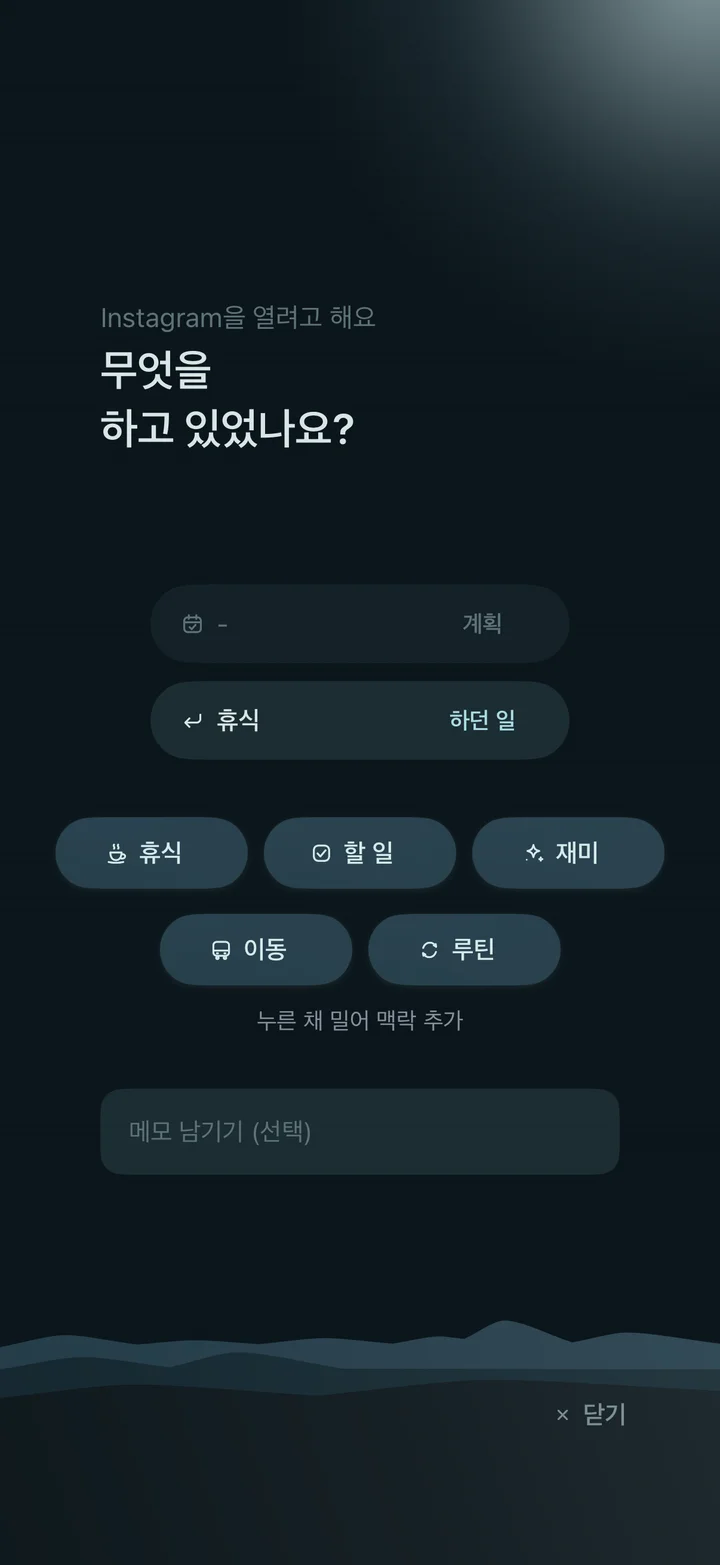
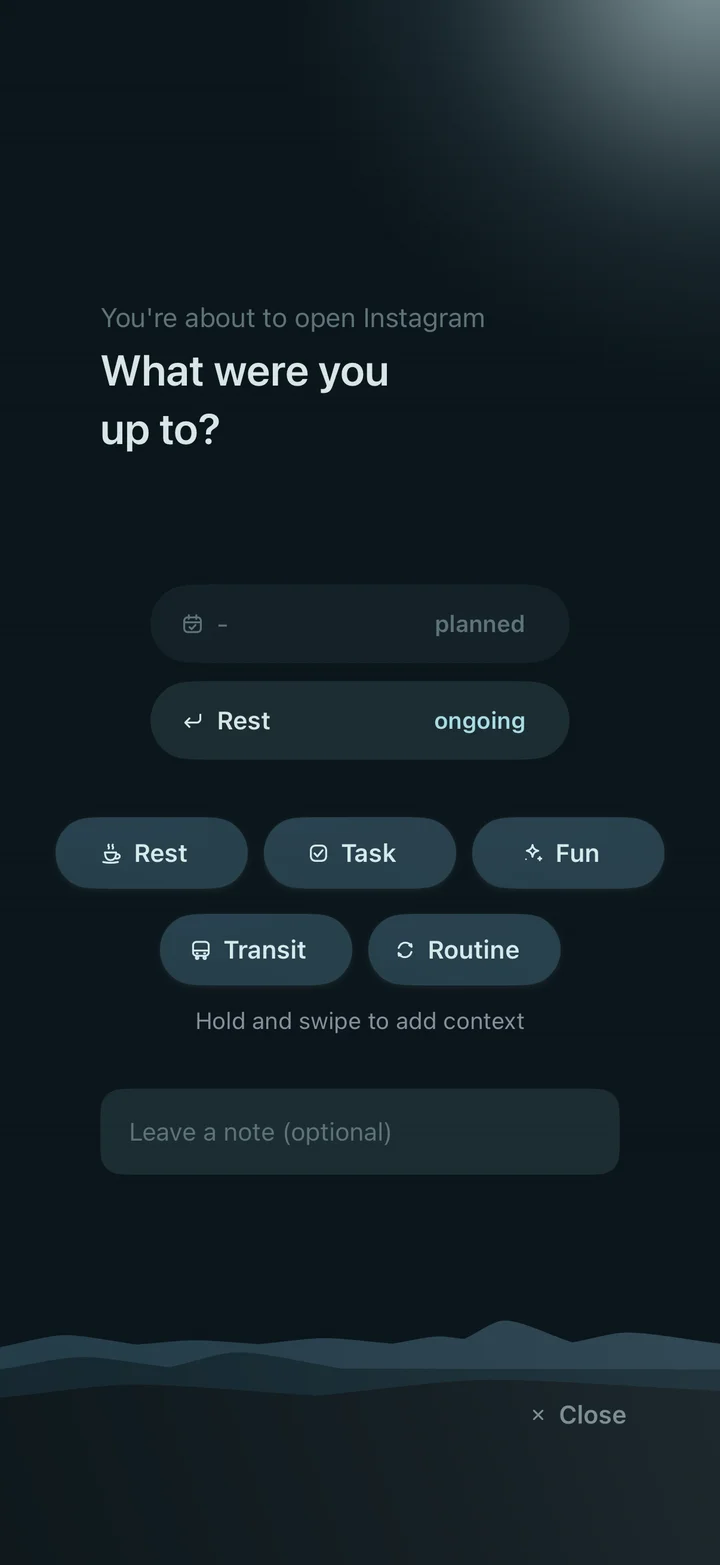
나를 멀리서 바라봅니다.
목적에 따라 나뉜 다섯 가지 활동 중 하나를 선택합니다.1
하고 있던 일에 이름을 붙이며 내가 무엇을, 왜 하고 있었는지 알아차립니다. The first screen, just before your target app opens.
See yourself from a little distance.
Choose one of five activities, grouped by purpose.1
Putting a name to it is where you notice what you were doing — and why.
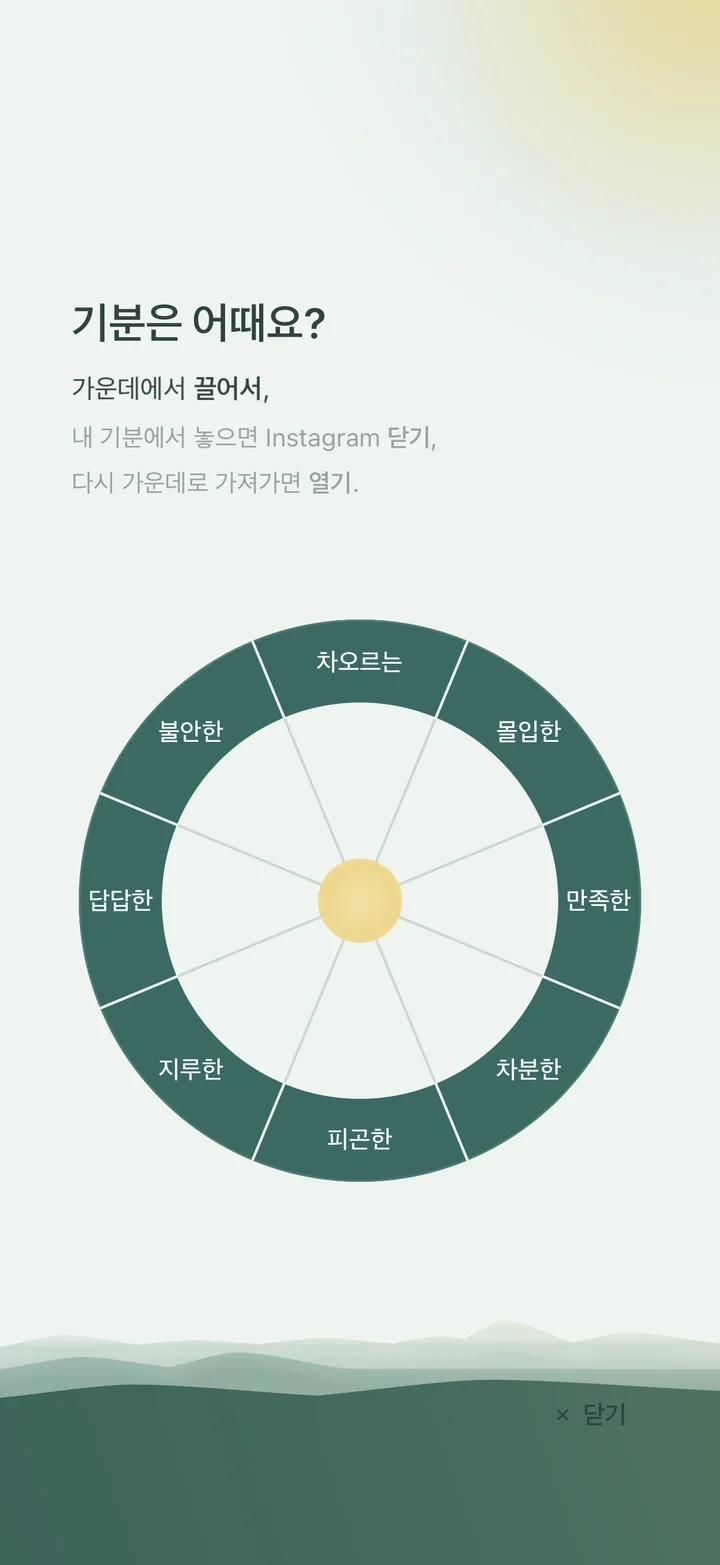
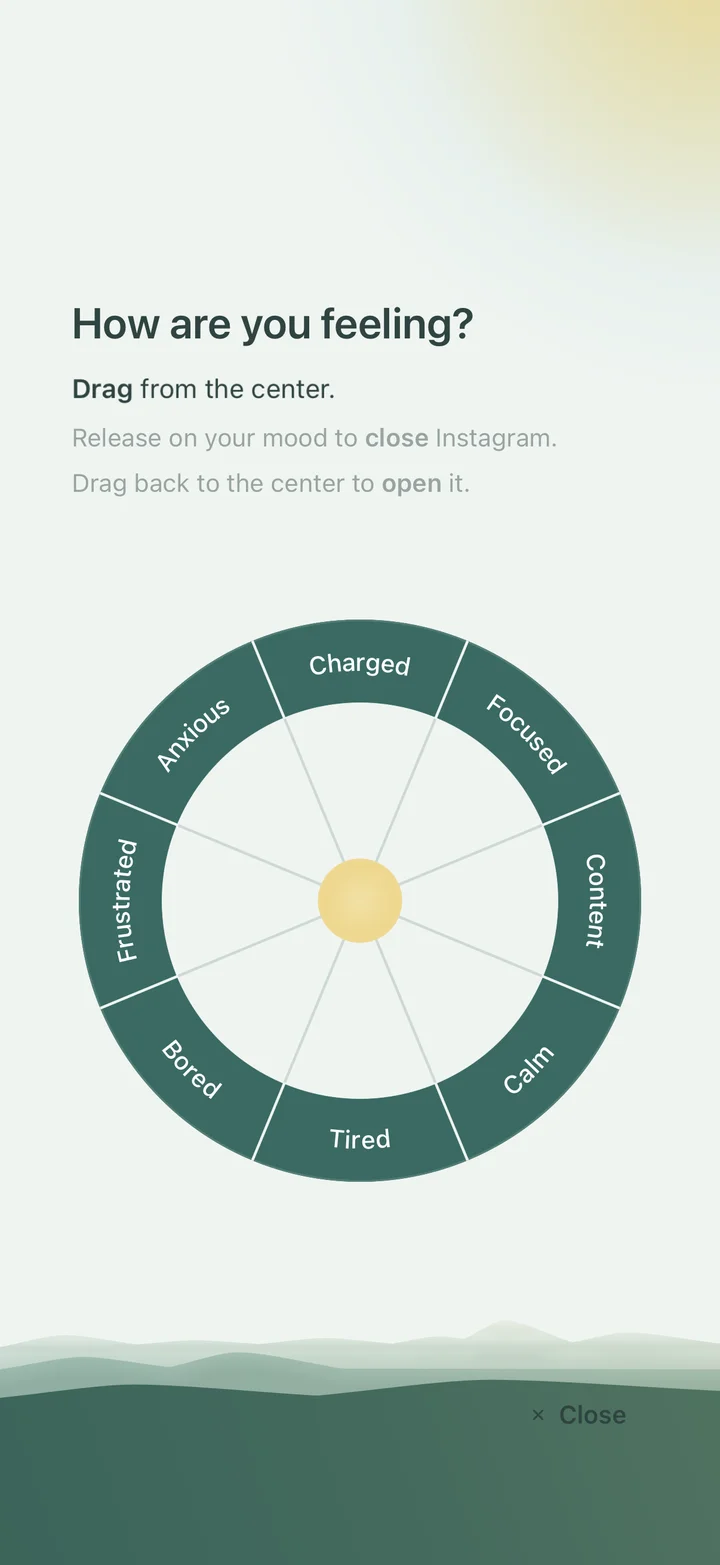
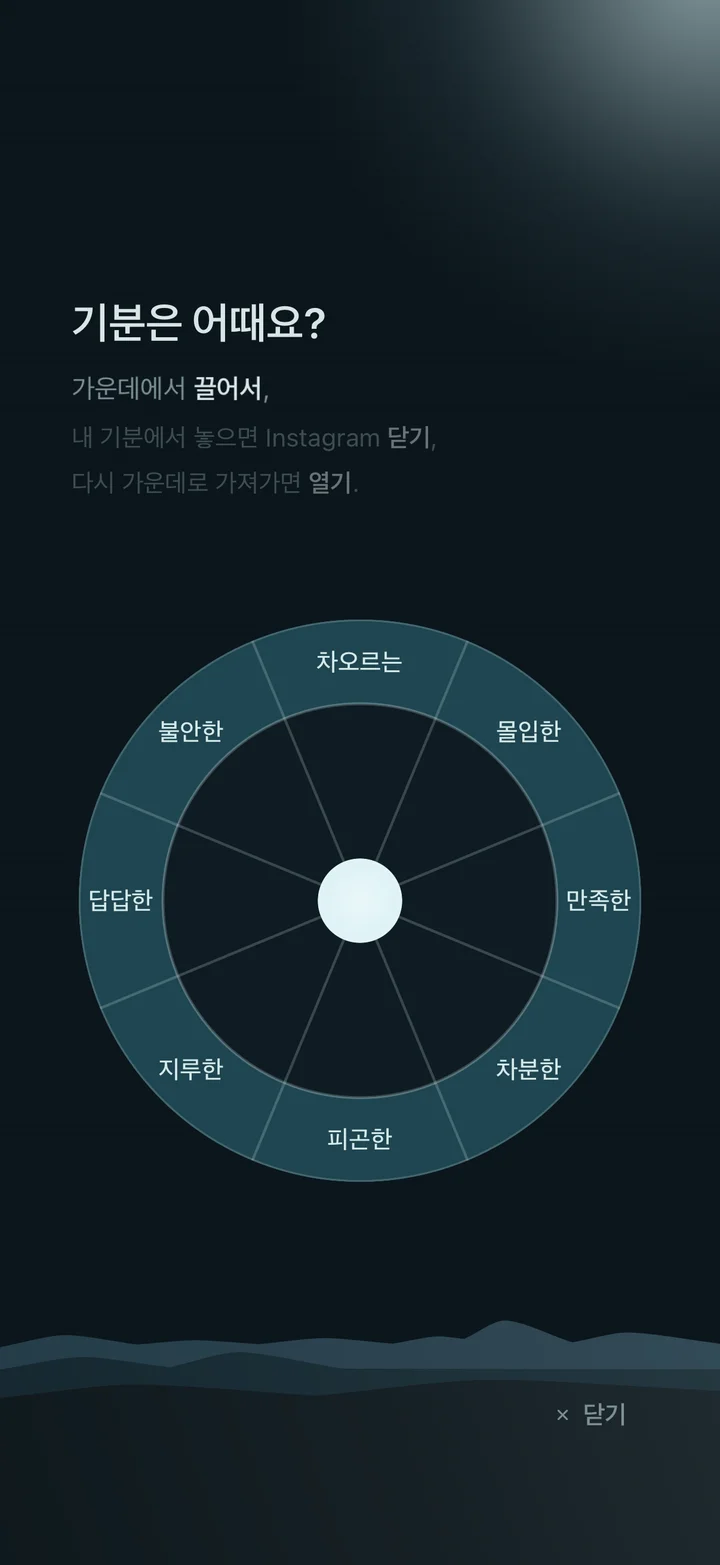
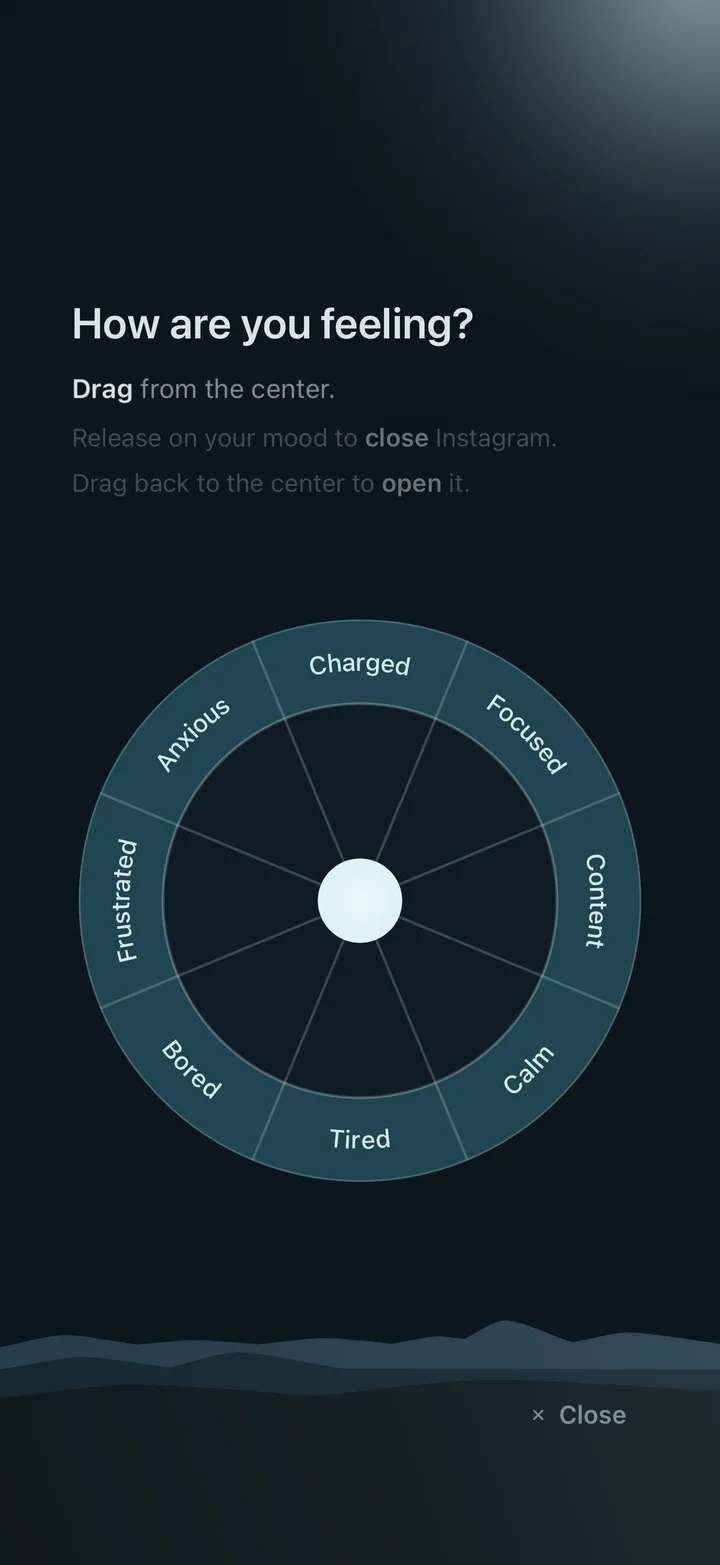
얼마나 들뜨거나 가라앉아 있는지, 유쾌하거나 불쾌한지에 따라
배열된 여덟 가지 기분을 훑어보며,2 마음의 온도를 알아챕니다.
내 기분에 해당하는 곳에서 손을 떼면 타겟 앱을 열지 않고,
다시 가운데로 가져와 놓으면 앱을 엽니다. This time, listen to what you’re feeling.
As you look through eight moods, arranged by energy level and whether they feel positive or negative,2
you begin to sense your emotional temperature.
You choose whether to open the app, based on where you released your pointer.
1 Larson, R., & Csikszentmihalyi, M. (1983). 경험표집법. New Directions for Methodology of Social and Behavioral Science, 15. 1 Larson, R., & Csikszentmihalyi, M. (1983). The experience sampling method. New Directions for Methodology of Social and Behavioral Science, 15.
2 Russell, J. A. (1980). 정서 원형 모형. Journal of Personality and Social Psychology, 39(6). 2 Russell, J. A. (1980). A circumplex model of affect. Journal of Personality and Social Psychology, 39(6).
짧지만 밀도 있는 개입 A short intervention, but a dense one.
nownow의 개입 화면을 직접 확인해보세요. See for yourself how nownow works.
활동을 누른 채 밀면 맥락이 함께 남습니다 — 학교·일터, 집, 이동, 기타.
맥락은 선택 사항이며, 리포트를 더 세밀하게 구성하는 데 쓰입니다. Let go on a mood and the target app closes, returning you to the home screen.
Press and drag an activity to add context — school/work, home, transit, other.
Context is optional, and it goes into making a report more detailed.
흐름을 기록합니다. A record of life as it unfolds.
지난주부터 내 기분은 어떻게 움직였는지,
무엇을 하고 있었고, 어떤 기분일 때 타겟 앱을 가장 오래 사용했는지.
하루하루가 입체적으로 쌓입니다.
How your mood has shifted since last week,
what you were doing and how you felt
when you spent the most time on your target app.
As time goes by, your life comes into fuller view.
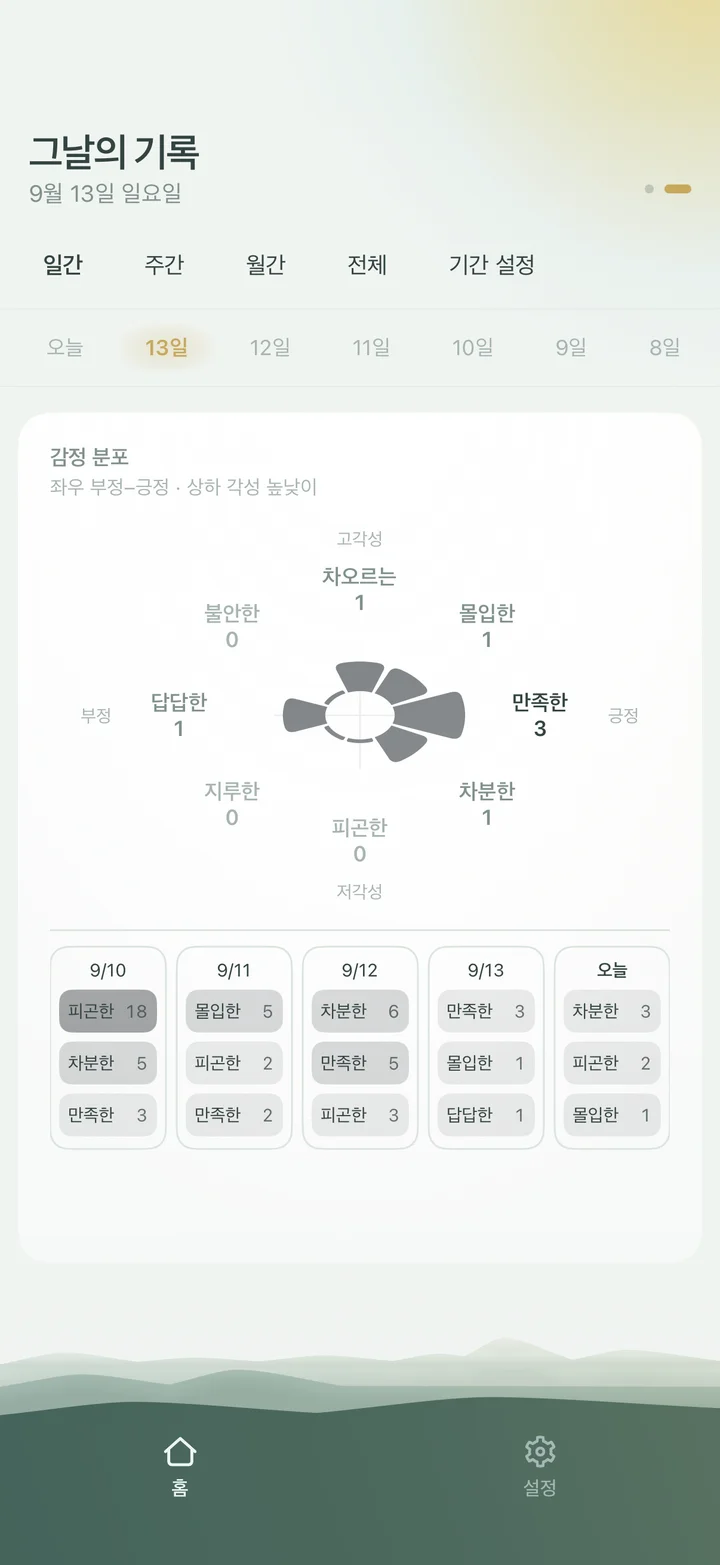
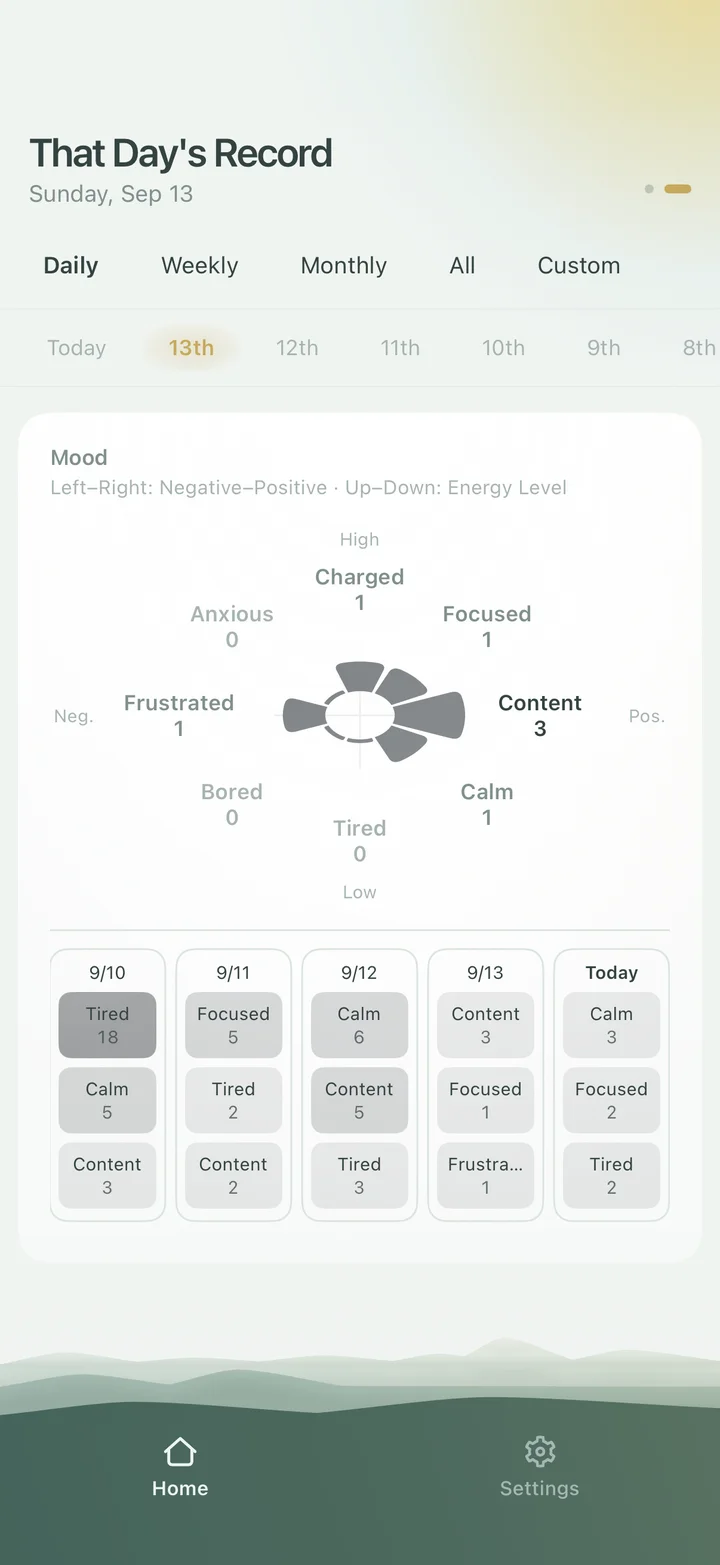
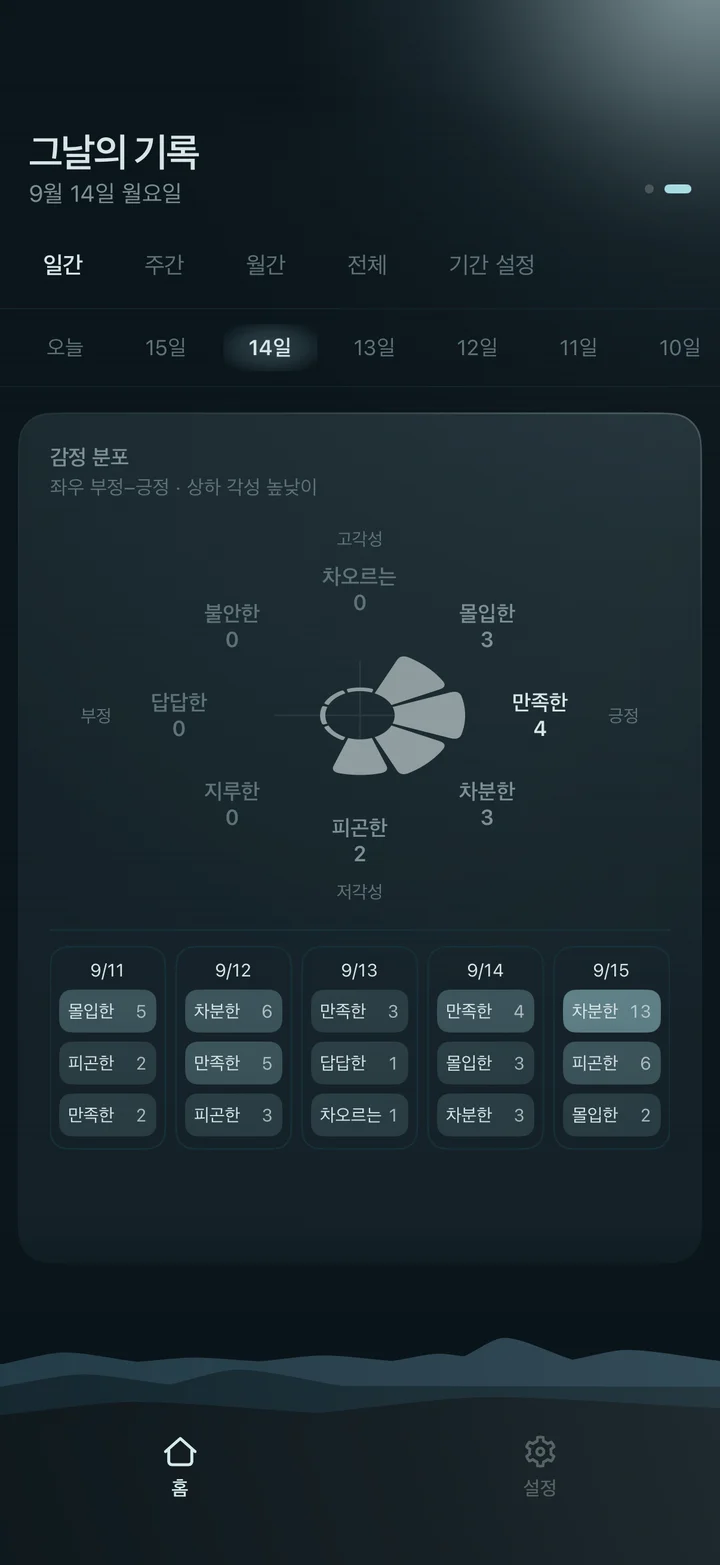
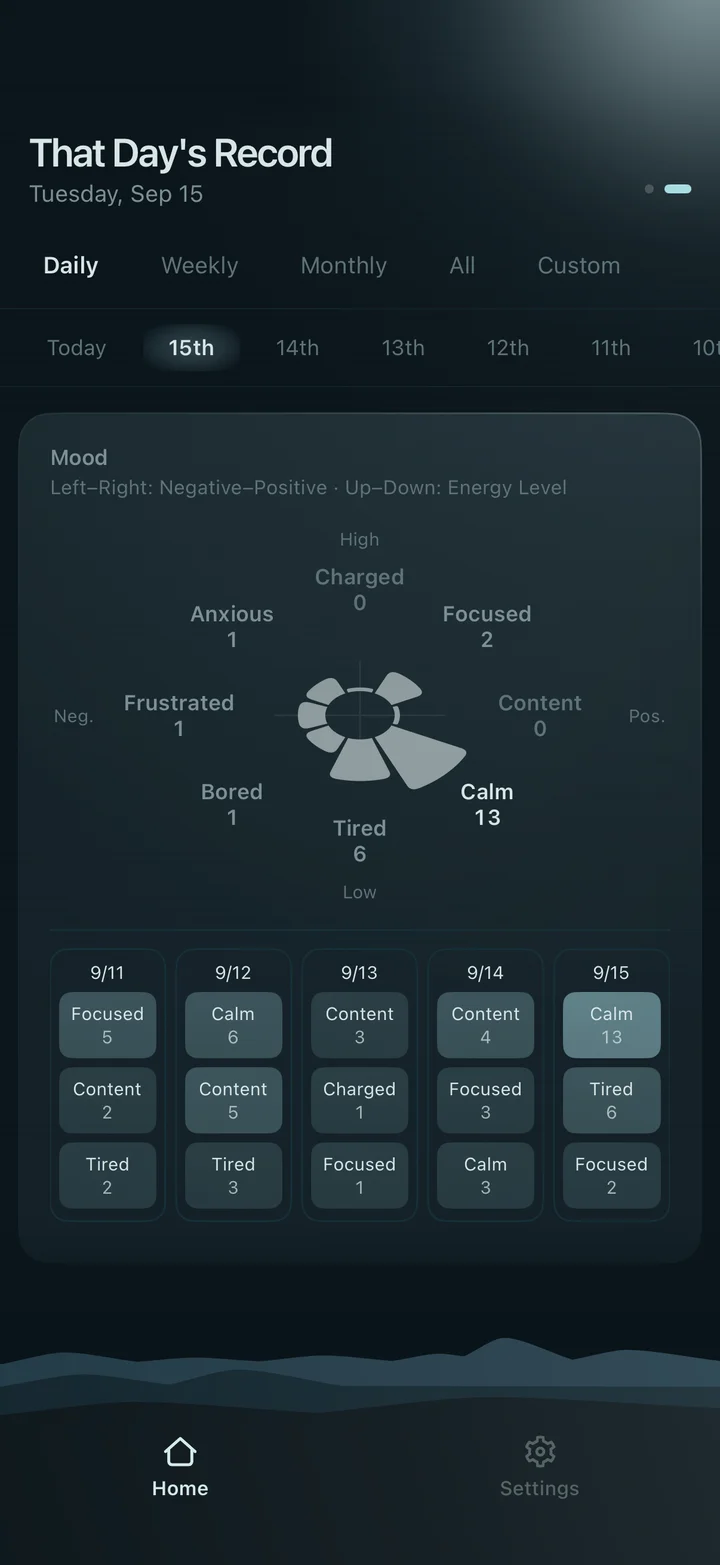
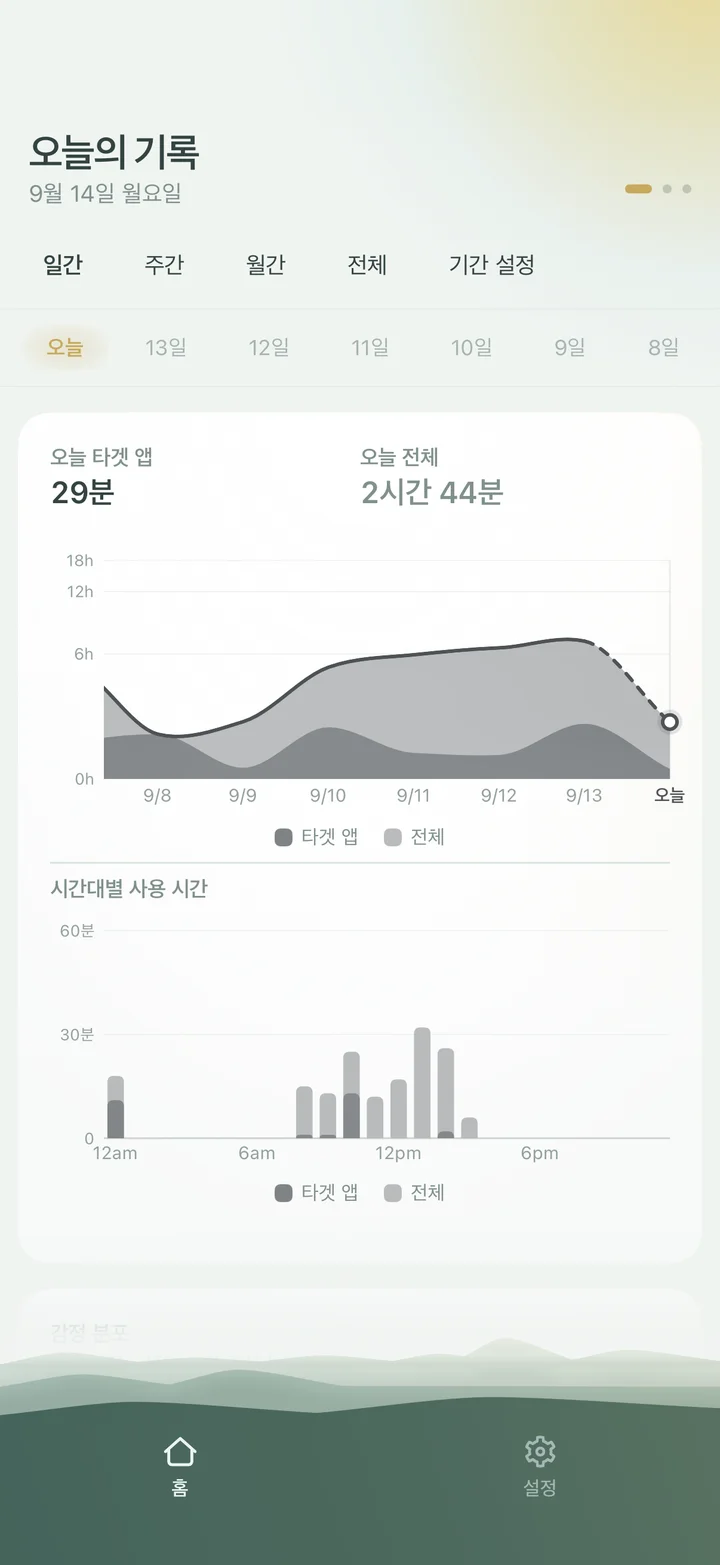
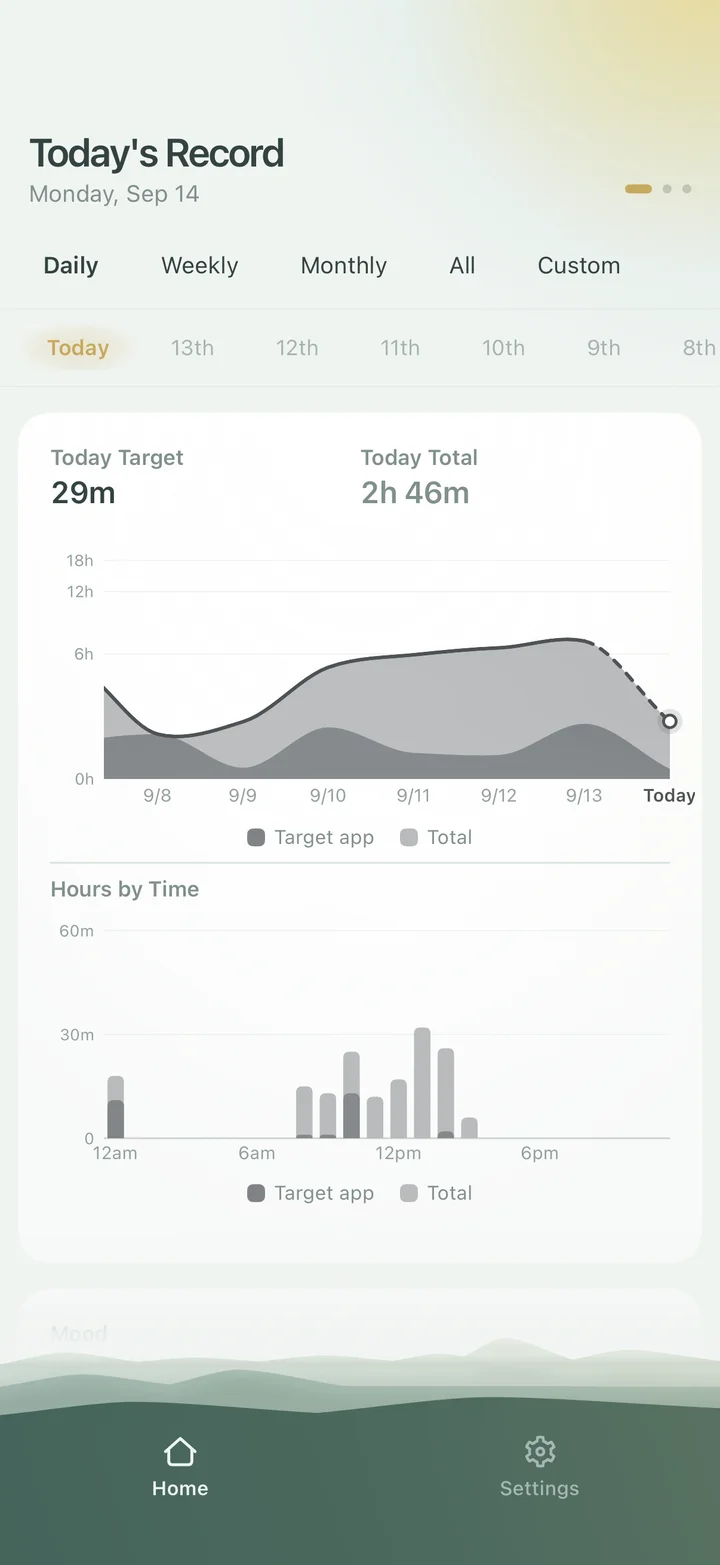
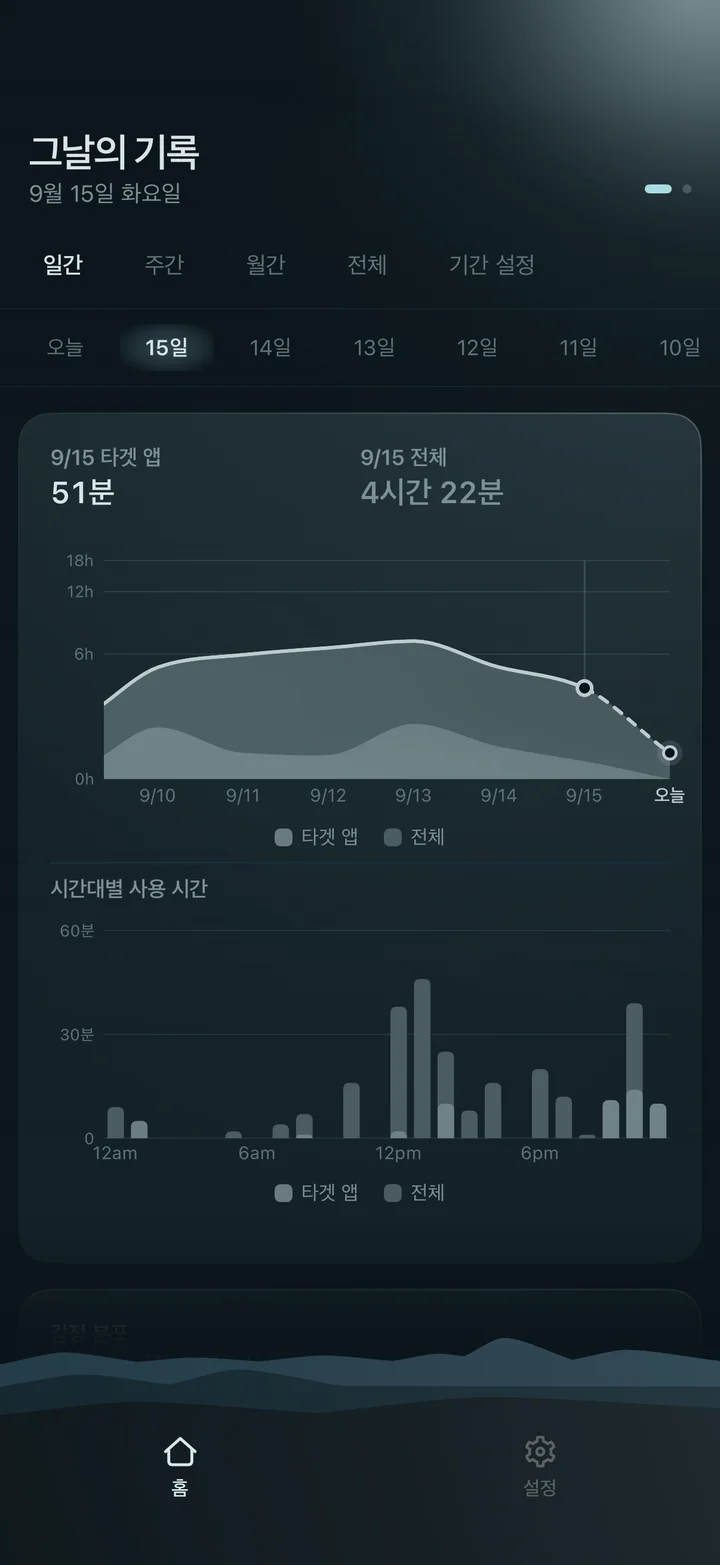
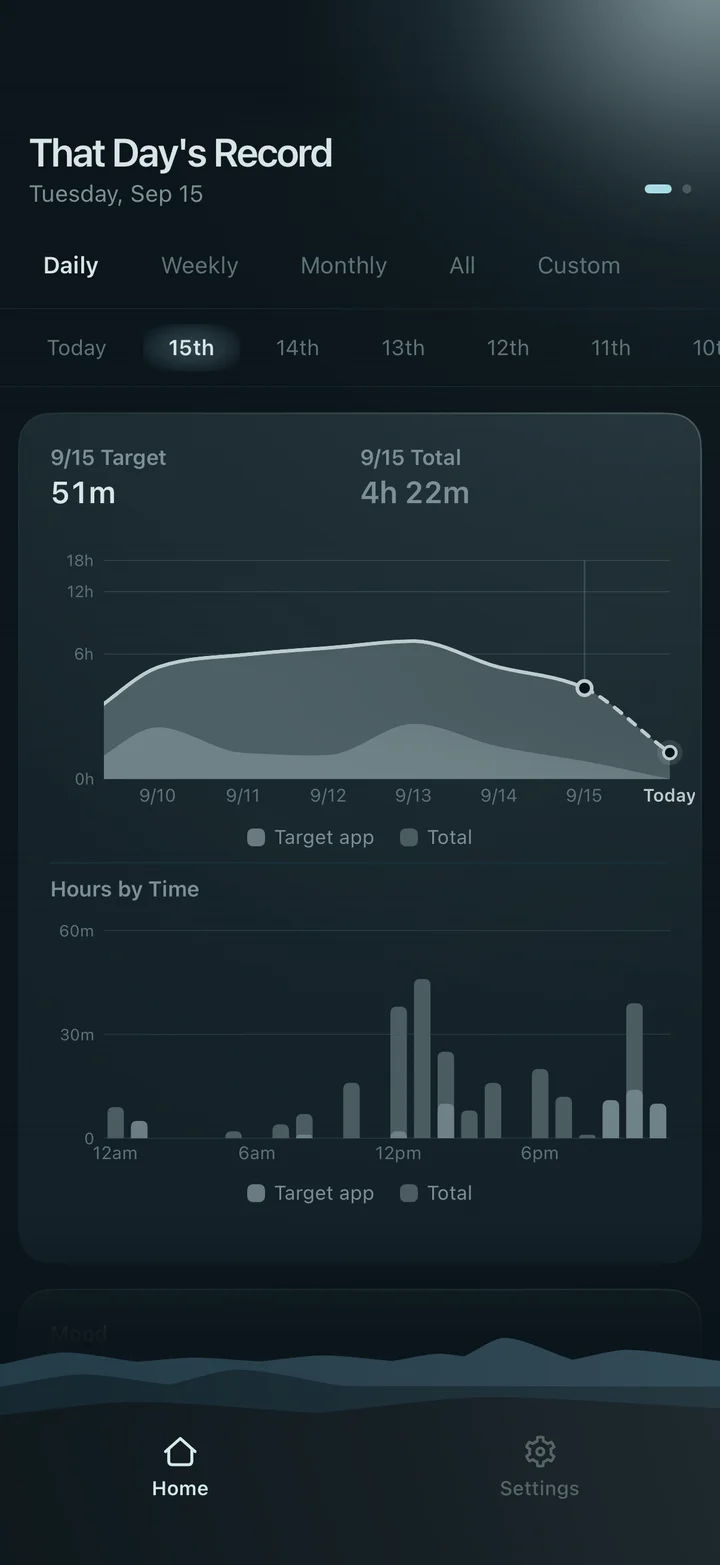
감정과 행동의 패턴을 AI가 여러 각도로 살핍니다. AI examines patterns in your emotions and behavior from several perspectives.
내 배경 감정은 어떻게 흐르는지, 나는 몇 시쯤에 가장 활력이 넘치는지,
부정적인 상태는 얼마나 지속되는지 — 답이 여러 주 모이면 AI로 패턴을 발견합니다.
오래 쓸수록 더 멀리 보입니다.
How your underlying mood changes.
What time of day you feel most alive.
How long unpleasant emotional states last.
Once several weeks of answers have gathered, AI helps uncover the patterns.
The longer you use nownow, the further you can see.
실제 리포트에서From actual reports
회복이 나타난 주에는 좋은 기분이 대부분 차분(49%)과 만족(34%)이었다 — 몰입이나 차오름 같은 고각성이 아니라 저각성의 편안함. 각성도는 회복 내내 오히려 내려갔다(−0.31 → −0.58). 튀어 오른 게 아니라 가라앉아 안정된 것이다. It was a week of recovery, and moods were overall positive as it showed Calm (49%) and Content (34%)—the ease of low arousal, rather than higher-arousal states such as Focused or Charged. Arousal actually fell throughout recovery (−0.31 → −0.58). It was a gradual settling into stability, not an upward surge.
겉으로 나오는 답은 피로다. 하지만 피로와 불안은 반비례로 움직인다 — 바쁠 때 피로에 가려져 있던 불안이, 멈추면 드러나는 듯하다. On the surface, the answer is tiredness. Yet tiredness and anxiety move in opposite directions: when you’re busy, fatigue masks the anxiety; when you stop, the anxiety reappears.
개발 중인 기능입니다.This feature is in development.
의도적으로 덜 압니다Intentionally knowing less
nownow는 계정 없이 사용합니다. 이메일도 이름도 묻지 않습니다. There are no accounts in nownow — no email, no name.
직접 입력한 글은 기기 밖으로 나가지 않습니다.
서버에 남는 것은 익명화된 카테고리 데이터뿐이라, 개발자도 누가 누구인지 알 수 없습니다.
Your written responses stay on your device.
Only anonymized category data reach the servers,
so even the developer can’t tell who anyone is.
베타 테스터를 찾고 있어요. Looking for beta testers.
아이폰과 안드로이드 모두 신청할 수 있어요. 아래 안내에 따라 메일을 보내주세요.
nownow works on both iPhone and Android.
To join, send an email with the following:
-
스토어 계정 이메일로 보내주세요. 초대가 그 계정으로 갑니다 —
안드로이드는 Google Play에, 아이폰은 App Store에 쓰는 이메일이에요. Your store account email
Please write from the email address you use for Google Play or the App Store.
Your invitation will be sent to that account. -
기기 종류 — iOS / Android
Your device type
iOS or Android. -
신청 이유 — 한두 줄
Why you’d like to join
Just a line or two.
버튼을 눌러도 메일 앱이 열리지 않으면 contact@nownowlife.com 으로 직접 보내주세요. If the button doesn’t open your email app, you can write directly to contact@nownowlife.com.